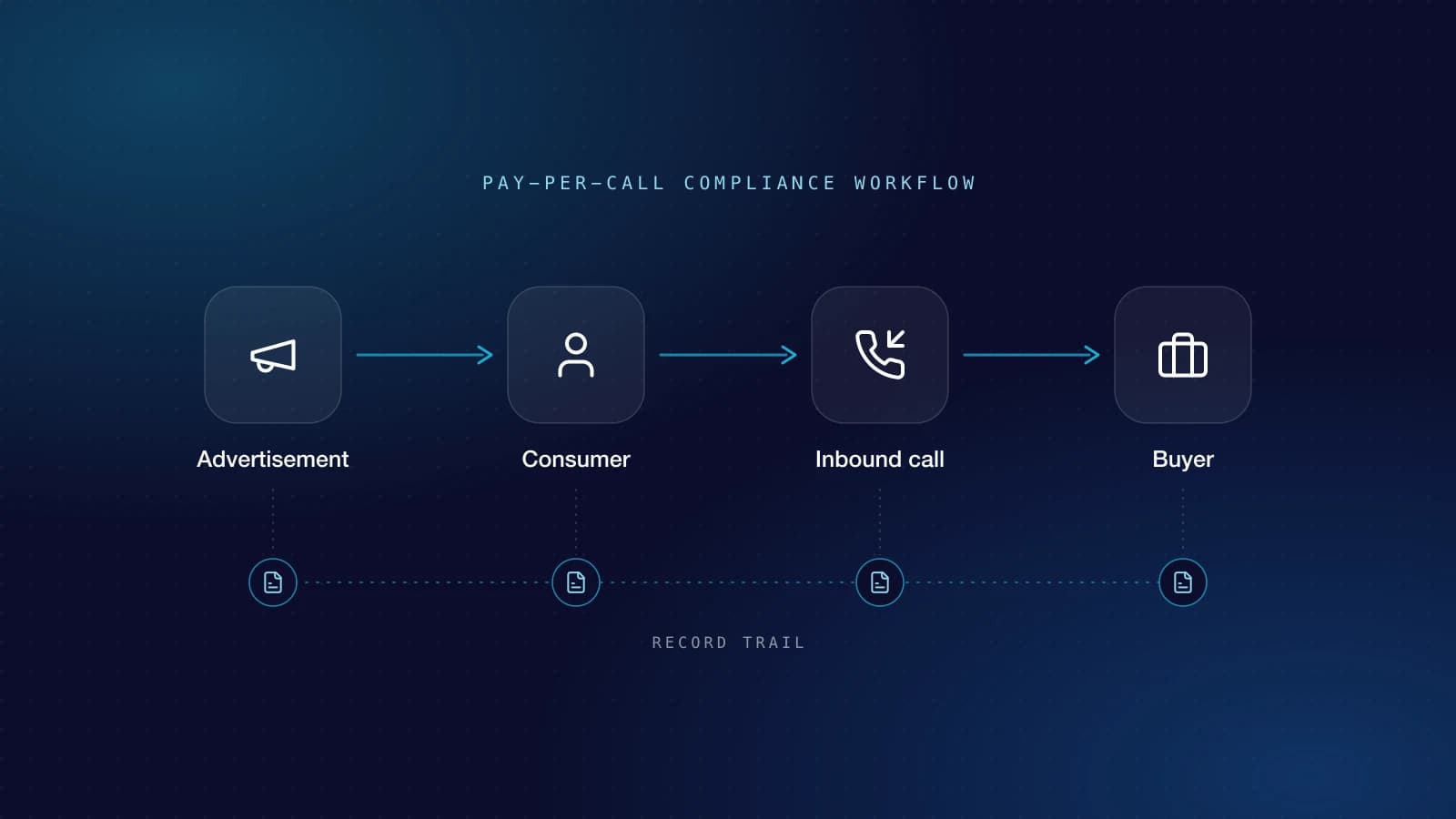
How to Measure Pay-Per-Call ROI Without Misreading the Numbers
A low cost per call does not automatically mean a campaign is performing well. A higher-priced call is not necessarily expensive either.
What matters is what happens after the phone rings.
For a business buying inbound calls, pay-per-call ROI is best understood by following the full path from the call itself to the customer and the economic value that customer creates. If reporting stops at call volume or call duration, a buyer can easily increase spend on traffic that looks efficient but produces weak business results.
LeadNova positions its buyer offering around inbound call opportunities matched to factors such as industry, location, service type, availability and volume. It also makes clear that a call is an opportunity rather than a guaranteed sale because the result still depends on the buyer's pricing, offer, sales process, availability and agent performance.
That distinction is important. A useful ROI model needs to measure both the quality of the opportunity and what the business does with it.
Start with the whole call funnel
The simplest way to evaluate a pay-per-call campaign is to stop treating every incoming call as the same event.
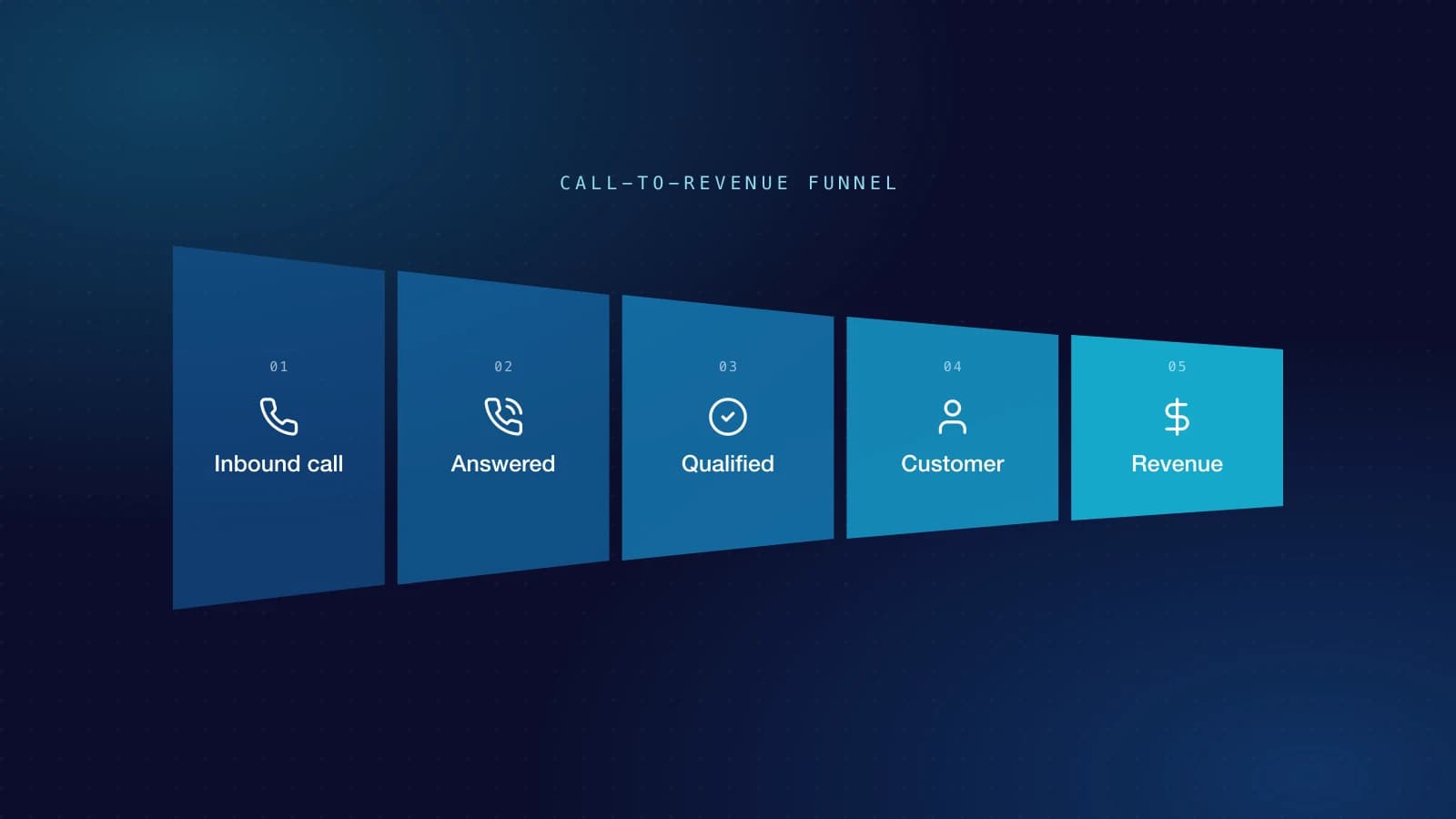
A call moves through several stages. It reaches the business, someone answers it, it either meets the agreed campaign criteria or it does not, and the conversation may eventually produce a sale or another meaningful outcome.
The economics sit underneath that sequence.
| Metric | Simple calculation | What it tells you |
|---|---|---|
| Answer rate | Answered calls divided by delivered calls | Whether the business is actually available for the demand it is buying |
| Qualification rate | Qualified calls divided by the agreed call population | How much of the traffic fits the campaign criteria |
| Cost per qualified call | Campaign spend divided by qualified calls | What relevant conversations are actually costing |
| Call-to-sale conversion rate | Sales divided by qualified calls | How effectively the business turns relevant conversations into customers |
| Campaign CAC | Campaign spend divided by customers acquired | Acquisition cost from that campaign |
| Revenue per call | Attributed revenue divided by delivered calls | How much revenue the average delivered call generates |
| ROAS | Attributed revenue divided by campaign spend | Revenue generated for each dollar of campaign spend |
| Simplified gross-profit ROI | Gross profit from attributed sales minus campaign spend, divided by campaign spend | Whether the campaign is creating economic value after product or service delivery costs |
The denominator matters. A qualification rate based on all delivered calls is not the same metric as qualification among answered calls. Changing definitions between reports can make a stable campaign appear to improve or decline when nothing meaningful has changed.
That is why the calculation rules should be written down before performance is compared over time.
Cost per call is only the first layer
Suppose two sources produce calls at different prices.
Source A costs $35 per call. Source B costs $55.
Looking only at the media price, Source A appears more efficient. Now assume Source A produces many out-of-area calls and a low close rate, while Source B consistently reaches consumers who match the buyer's service area and convert.
The unit that matters is no longer the call. It is the acquired customer.
This is where cost per qualified call and customer acquisition cost become more useful than headline cost per call.
If a buyer spends $10,000 and receives 200 calls, the apparent cost per call is $50. If only 100 of those calls meet the agreed qualification criteria, the cost per qualified call is $100. If 25 of those qualified calls become customers, campaign CAC is $400.
The same campaign can therefore be described as having a $50 call cost, a $100 qualified-call cost or a $400 acquisition cost. All three figures are mathematically correct, but they answer very different questions.
A buyer making budget decisions needs to know which question is being answered.
Measure answer rate before blaming lead quality
One of the easiest ways to misread a call campaign is to treat an unanswered opportunity as a traffic-quality problem.
LeadNova asks buyers to specify availability and realistic call volume as part of their requirements. Its buyer guidance also notes that sales performance can be affected by how effectively the business handles each conversation.
That means answer rate belongs in an ROI report.
If calls repeatedly arrive while agents are unavailable, increasing traffic may simply increase wasted spend. If answer rate falls when volume rises, the problem may be capacity rather than targeting.
Segmenting answer rate by hour and day can make this visible quickly. A campaign may look weak overall even though the calls delivered between 9 a.m. and 2 p.m. perform well and the real loss occurs later in the day when staffing drops.
This is more useful than an account-wide average because it tells the buyer what to change.
Define qualification before calculating ROI
LeadNova's existing guide to qualified inbound calls makes a useful point: qualification is campaign-specific. Geography, service requirements, eligibility, timing and other criteria can differ between campaigns.
That definition needs to remain stable in reporting.
Imagine that one month the business counts any call lasting more than 60 seconds as qualified. The following month it also requires a geographic match. Comparing the two qualification rates without documenting the rule change would produce a misleading result.
Duration deserves similar caution.
A minimum duration can be useful as a billing or engagement threshold, but duration on its own does not prove commercial value. A long conversation can end without a viable opportunity, while a shorter conversation may produce an appointment or sale.
The stronger measurement system combines campaign qualification with downstream business outcomes.
Connect the call to the sale
The biggest gap in many call reports appears after the conversation ends.
The marketing system knows a call happened. The sales team knows whether it became a customer. If those systems never exchange information, the buyer cannot see which traffic actually produced revenue.
This is why closed-loop attribution matters.
A useful call record may include the source, campaign, date and time, service or vertical, qualification result, sales outcome and revenue value. The exact technology is less important than maintaining the connection between acquisition and outcome.
Google Ads illustrates this principle in its own phone conversion tools. It can measure several types of phone-call conversions and allows businesses using external systems such as a CRM to import certain downstream call outcomes, including sales and associated values.
A LeadNova buyer does not need to use Google Ads for every call to apply the same principle. The goal is simply to avoid separating call acquisition data from customer outcome data.
A worked ROI example
Consider a hypothetical campaign with the following month-end results.
| Result | Amount |
|---|---|
| Campaign spend | $10,000 |
| Delivered calls | 200 |
| Answered calls | 160 |
| Qualified calls | 100 |
| New customers | 25 |
| Attributed revenue | $30,000 |
| Attributed gross profit before campaign cost | $15,000 |
- The cost per delivered call is $50.
- The answer rate is 80 percent.
- The cost per qualified call is $100.
- The qualified-call-to-sale conversion rate is 25 percent.
- Campaign CAC is $400.
- Revenue per delivered call is $150.
- ROAS is 3.0x because $30,000 in attributed revenue came from $10,000 in campaign spend.
Using gross profit rather than revenue, the simplified campaign ROI is 50 percent:
($15,000 gross profit − $10,000 campaign spend) ÷ $10,000 = 50%
That final figure still is not necessarily the company's full financial ROI. Staffing, software, commissions, overhead and other incremental costs may also need to be considered.
The point of the example is not to establish a benchmark. It shows how different the picture becomes when reporting continues past the initial phone call.
Diagnose the weak stage before changing the source
When performance falls, the first instinct is often to question the traffic provider. Sometimes that is correct. Sometimes the problem sits elsewhere in the funnel.
| What the data shows | What deserves investigation |
|---|---|
| Many delivered calls but a low answer rate | Staffing, routing, operating hours and capacity |
| Strong answer rate but weak qualification | Targeting, geography, campaign criteria and traffic source |
| Strong qualification but weak sales | Sales process, pricing, offer and agent performance |
| Good sales volume but weak ROI | Margins, call cost and customer economics |
| Strong overall results but poor performance in one market | Geographic segmentation |
| Large differences by time of day | Scheduling and staffing |
This kind of diagnosis prevents expensive overcorrection.
A buyer should not automatically pause a productive source because sales fell during a period when answer rate also collapsed. Nor should a buyer blame its sales team when the majority of calls fail the agreed campaign requirements.
Good reporting separates those problems.
What is a good pay-per-call ROI?
There is no universal percentage that makes a pay-per-call campaign good.
A business with high gross margins, repeat purchases or strong customer lifetime value can support a very different acquisition cost from a business with thin margins and one-time transactions.
The more useful benchmark is the buyer's own break-even point.
Start with the gross profit expected from a typical acquired customer. Then determine the maximum customer acquisition cost the business can support while still meeting its required margin.
From there, the buyer can work backward to determine how much it can reasonably pay for a qualified call at its actual close rate.
For example, if a customer produces $600 in gross profit and the buyer wants at least $200 remaining after acquisition, the maximum acquisition cost is $400. If one in four qualified calls becomes a customer, a $100 cost per qualified call would reach that acquisition-cost ceiling.
That logic is much more useful than comparing a call price with an industry average that may have been built around completely different economics.
Use ROI to decide what to change, not simply whether to stay
The purpose of measurement is not to produce a monthly score.
It is to decide what should happen next.
A buyer with strong qualification and weak conversion may need better call handling. A buyer with strong conversion but rising acquisition cost may need tighter targeting. A buyer with profitable economics and unused capacity may have room to expand volume.
LeadNova's model is built around matching publisher call supply with buyer requirements rather than treating every buyer and every call as interchangeable.
The buyer's reporting should follow the same logic.
Do not ask only how many calls arrived or what each call cost.
Ask what happened to those calls, what customers came from them and whether the economics still make sense after the sale.
That is the point at which pay-per-call reporting becomes useful for actual budget decisions.
Relevant sources
- LeadNova's For Buyers page documents the buyer requirements, operating considerations and factors affecting sales outcomes used in this article. LeadNova — For Buyers
- LeadNova's article on qualified calls supports the distinction between a ringing phone and campaign-specific qualification. LeadNova — What Makes an Inbound Call Qualified?
- Google's official documentation explains phone-call conversion measurement and the ability to import downstream call outcomes. Google Ads — About Phone Call Conversion Tracking
- Google also documents the process for importing call conversions tracked in another system. Google Ads — Import Phone Call Conversions